
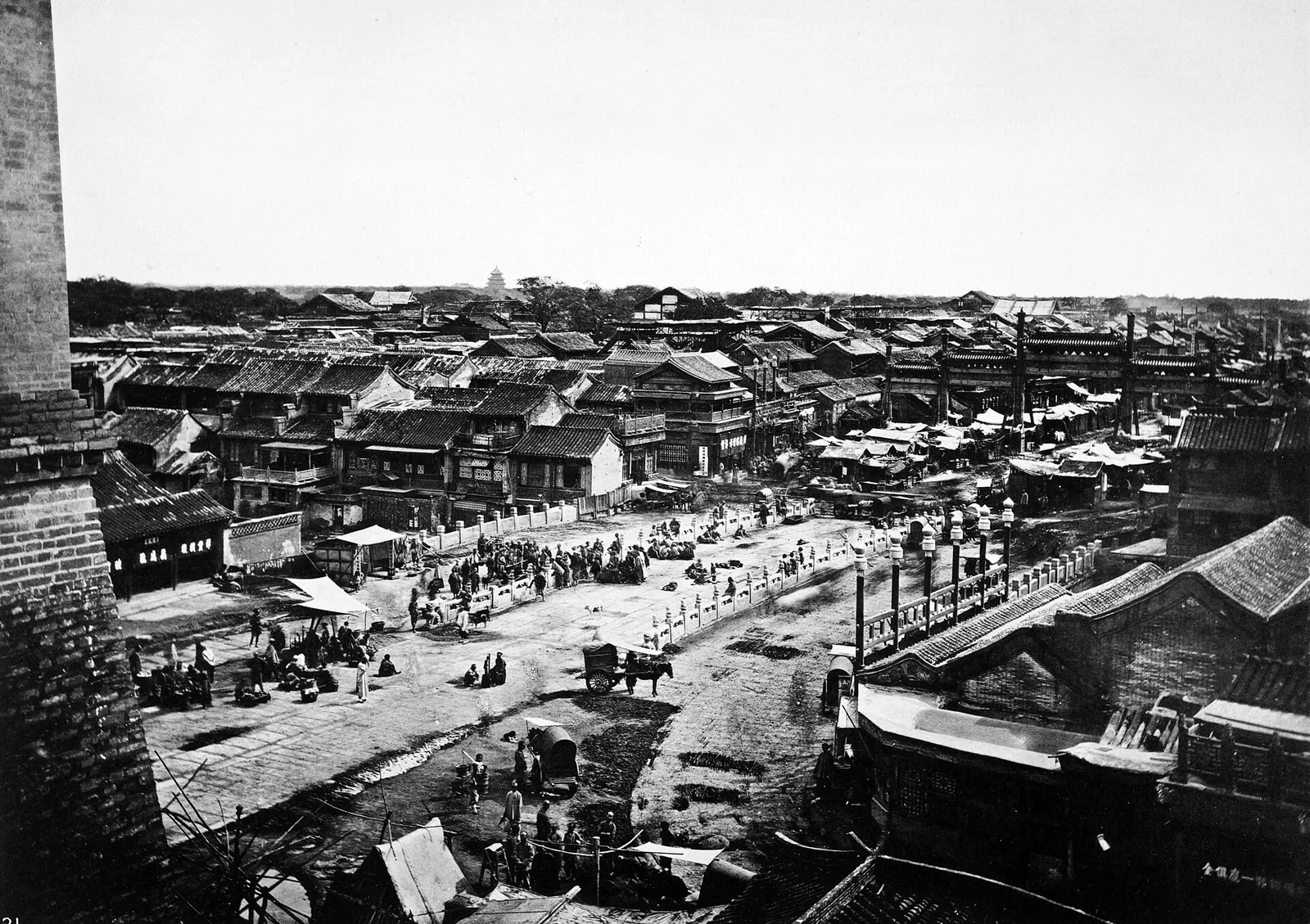
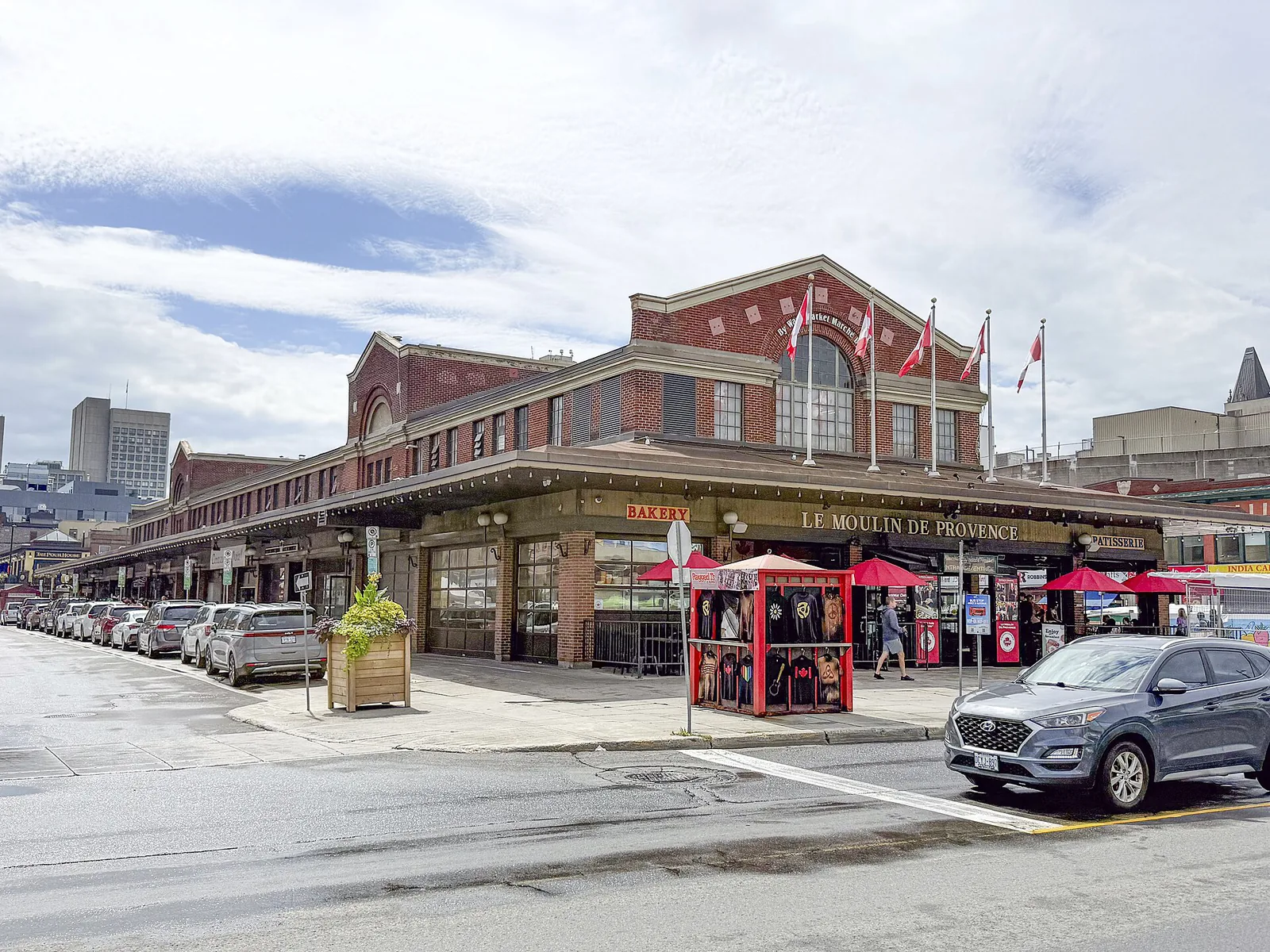
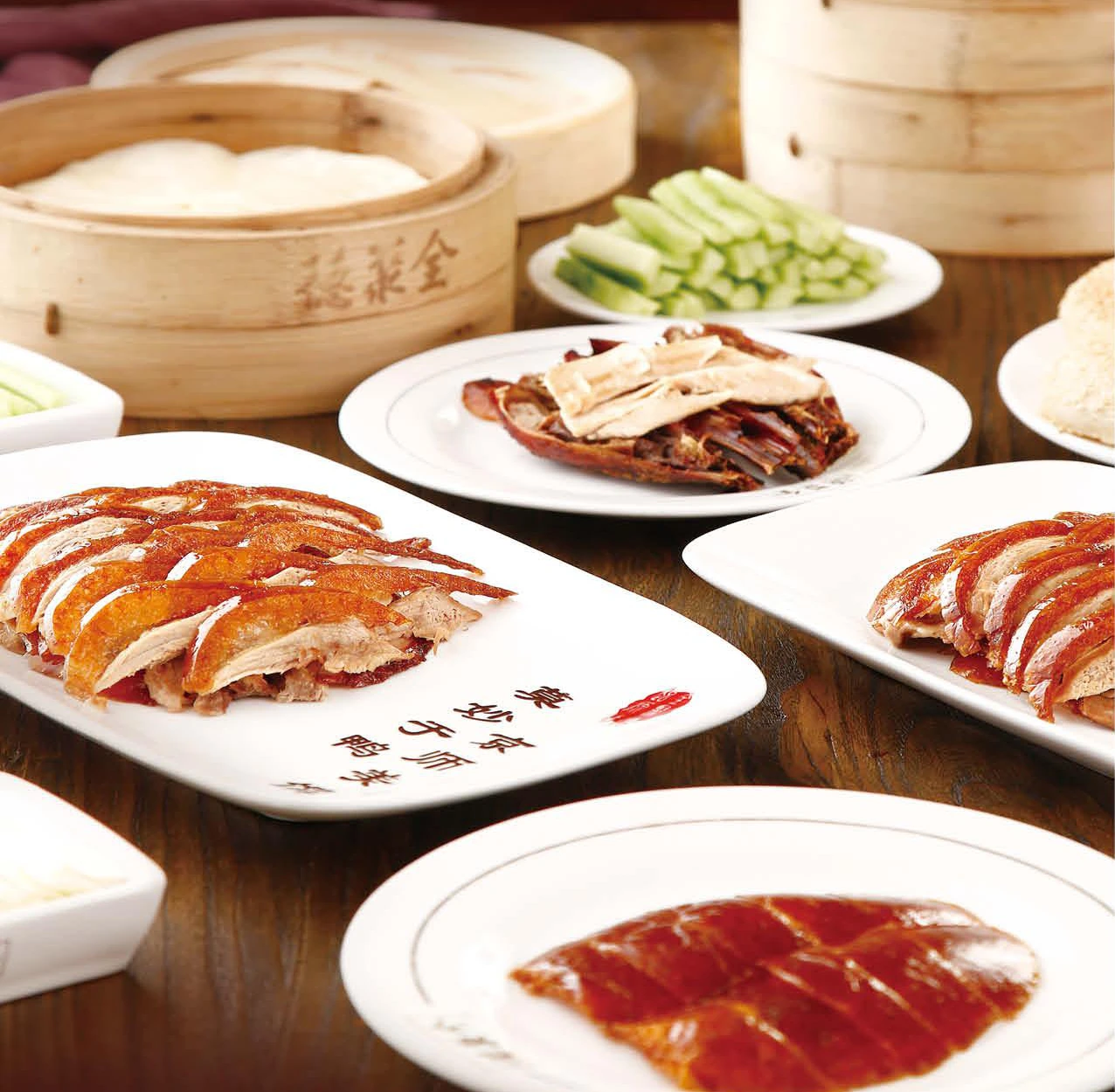
Beijing · 1864Ottawa · June 2022Two cities · one oven
A shop turns its sign around. More than 10,000 km away, a new table. More than 160 years, at one dining table.
On Qianmen Street in 1864, a failing shop became Quanjude — and the hung oven began to burn. On George Street, upstairs in ByWard Market, the same name and the same roast arrive in Canada’s capital. When the chef carves beside you, two histories become one dinner.
John Thomson, c. 1870s — John Thomson, Public domain, Wikimedia Commons · ByWard Market, 2026 — Hayden Soloviev, CC BY 4.0, Wikimedia Commons


Outside the Qianmen gate
Before Quanjude had a name, this was the neighbourhood it would grow in: the south gate of the old city, its markets, butchers and cook-shops. These archive photographs show the Beijing in which a poultry seller could take over a failing shop.
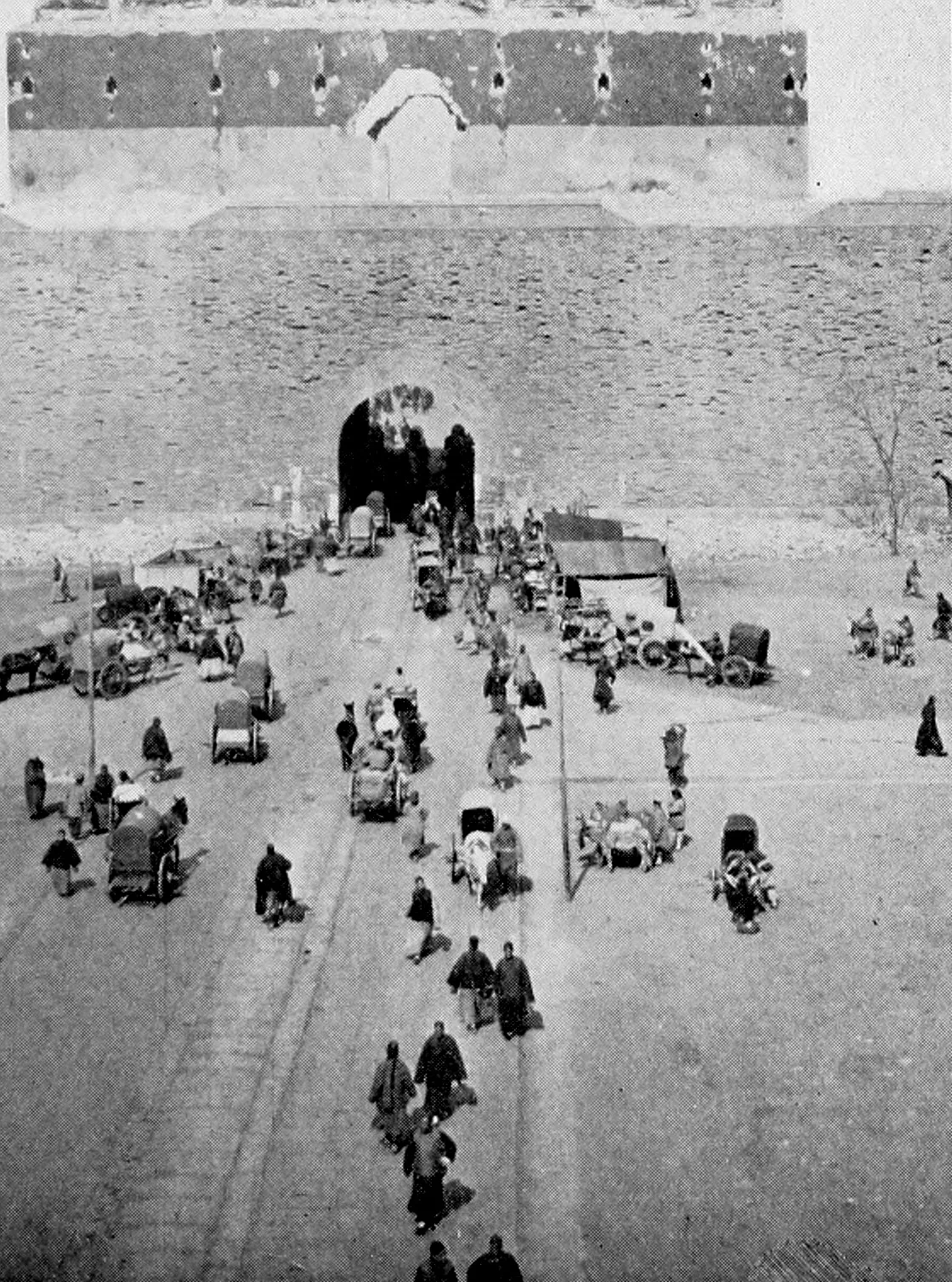

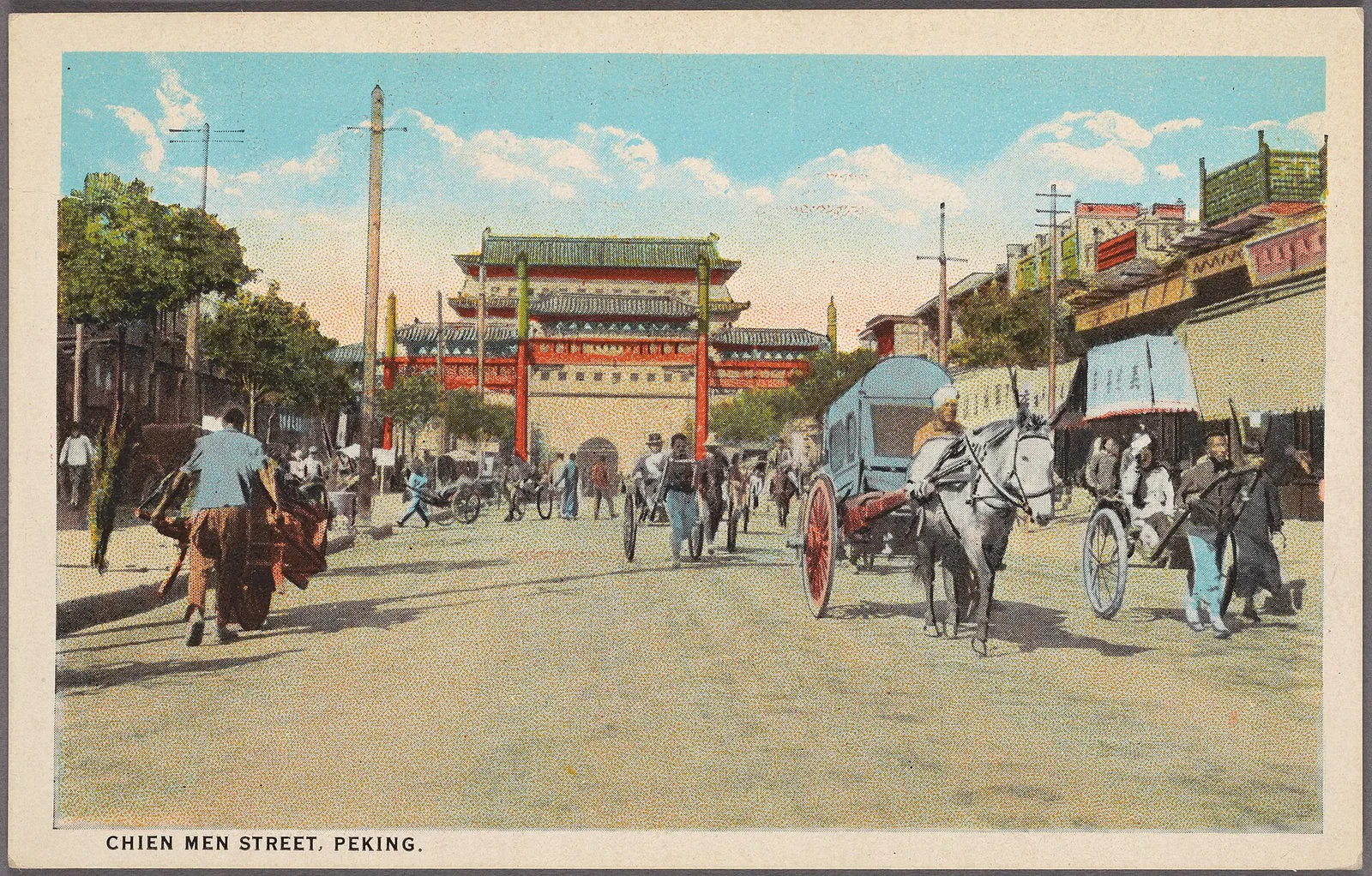

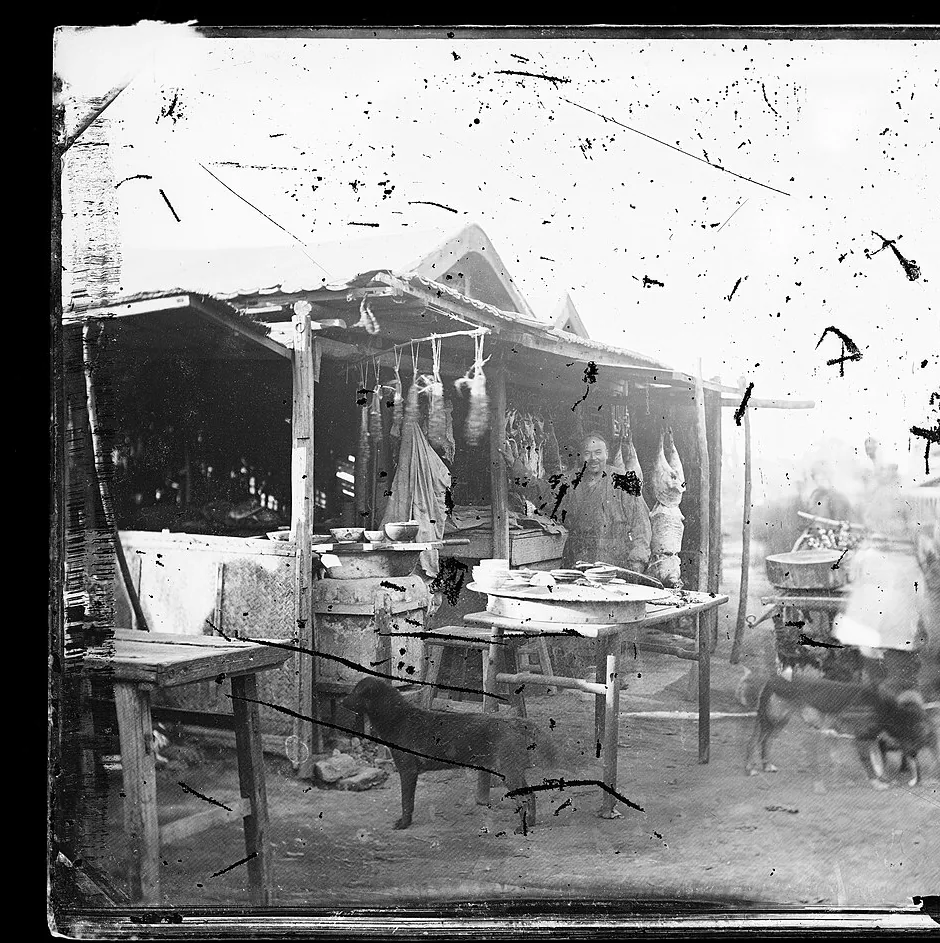

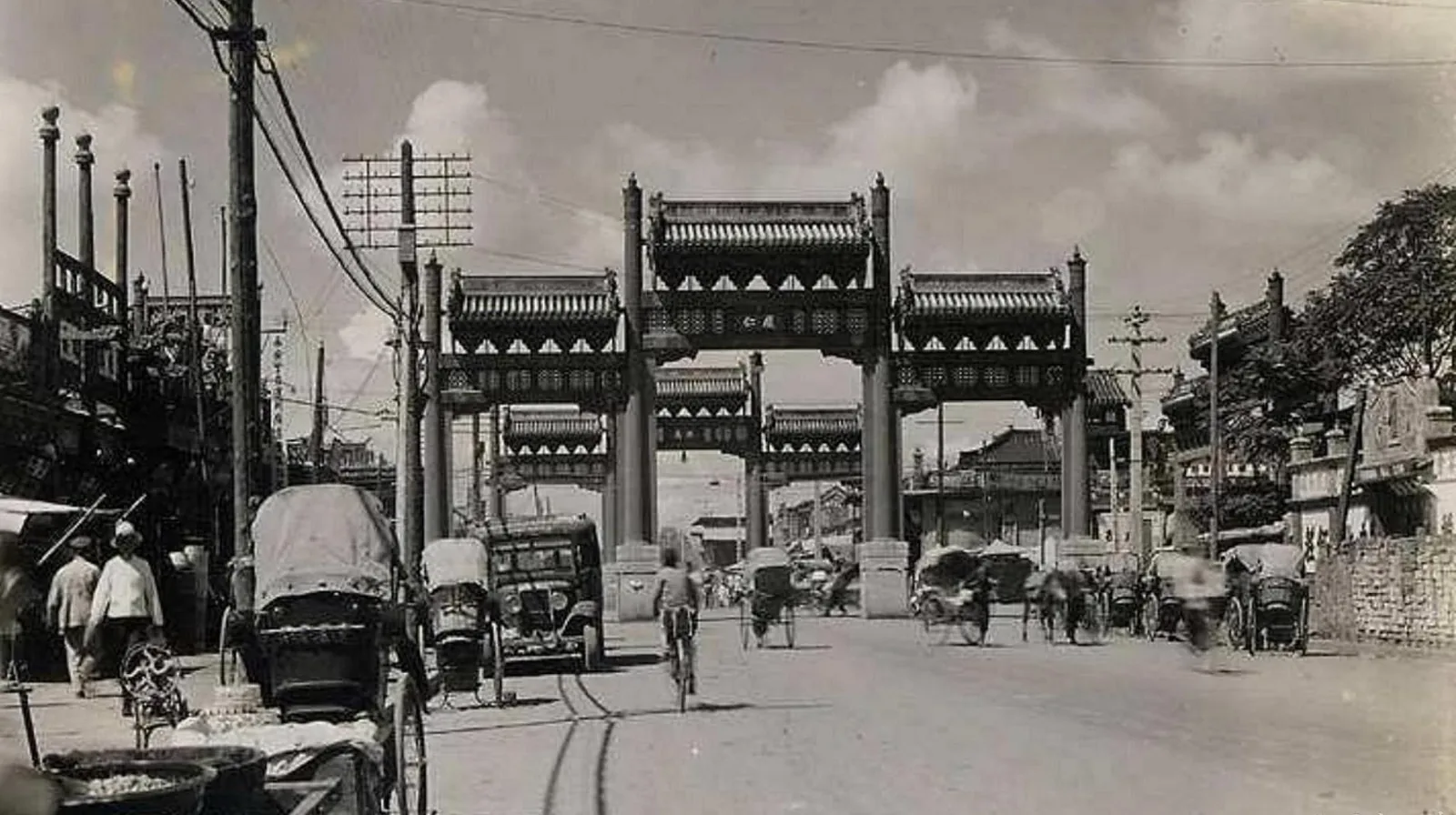

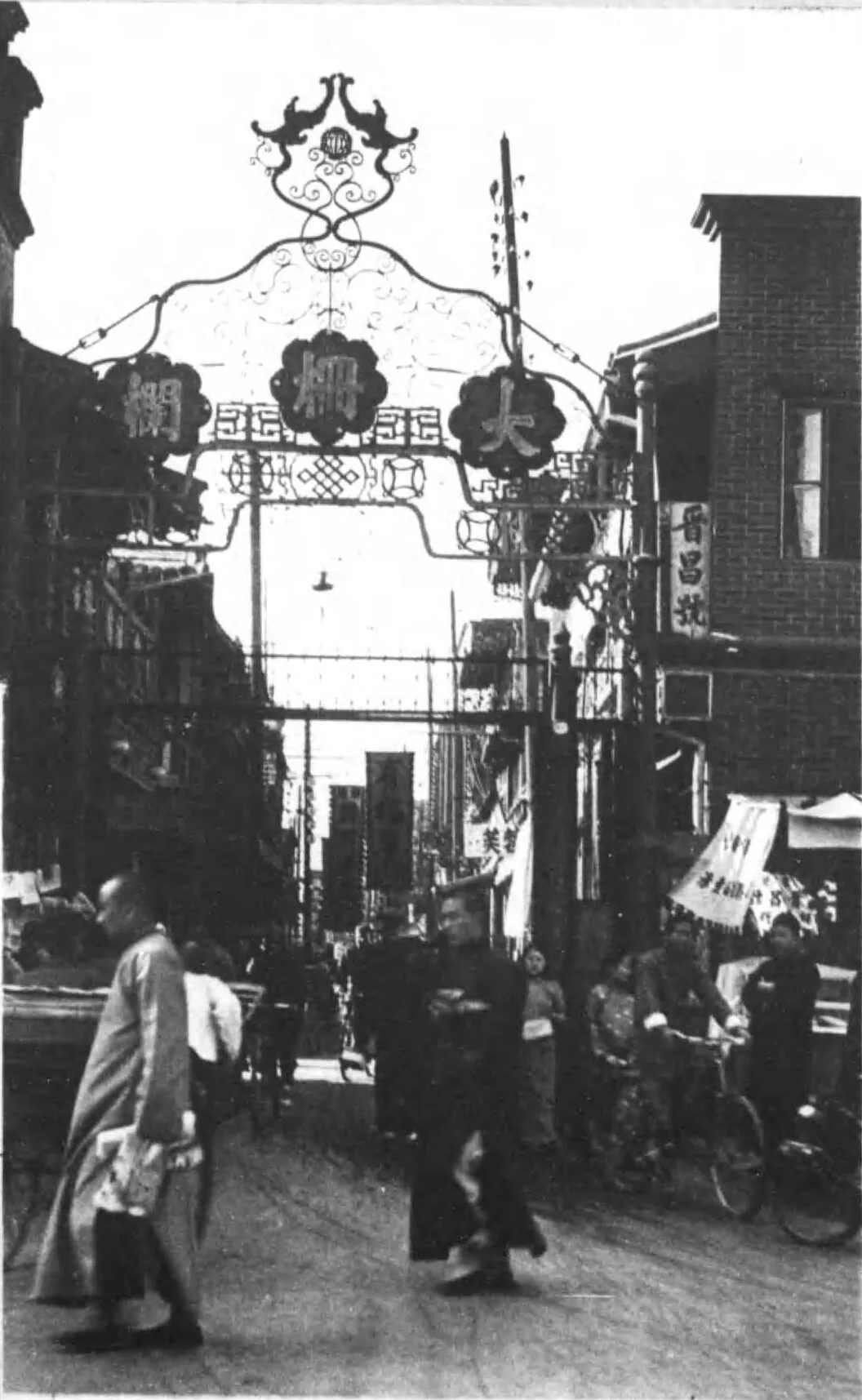

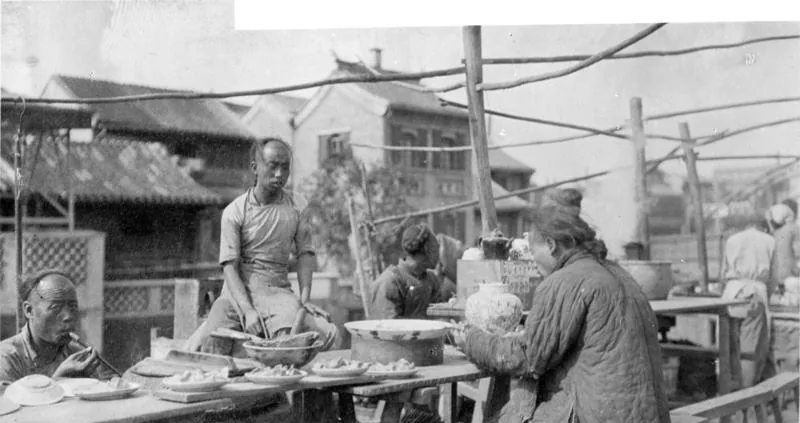

- 1864
The start on Qianmen Street
In 1864 a failing dried-fruit shop called Dejuquan (德聚全) stood on Beijing’s Qianmen Street. Yang Quanren, who sold chickens and ducks nearby, took it over, renamed it Quanjude (全聚德) and began selling roast duck and roast meats.
Read moreThe signboard and the name
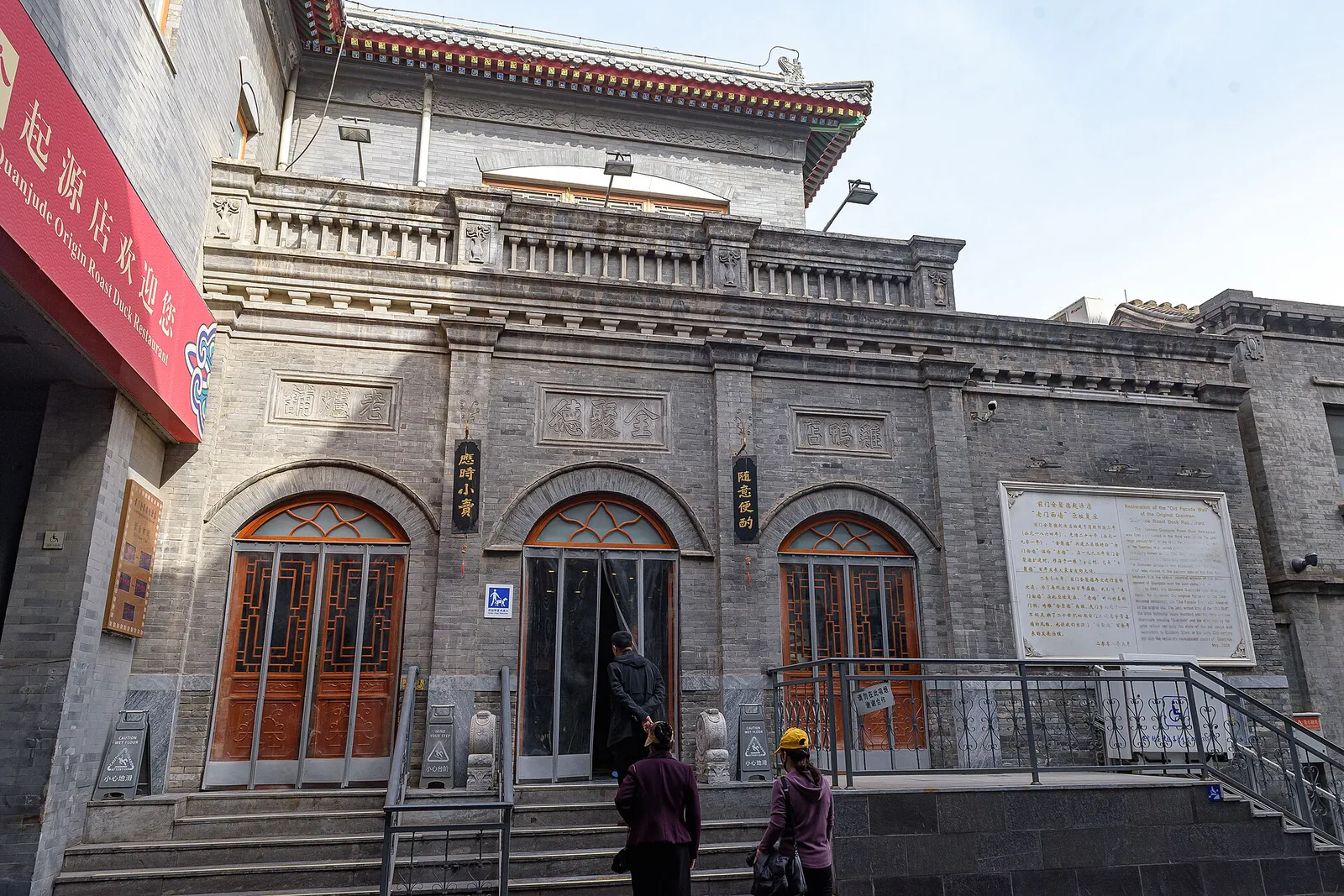
The Origin store on Qianmen Street, 2025 — N509FZ, CC BY-SA 4.0, Wikimedia Commons Sources: 全聚德集团官网 — 历史故事 · 澎湃新闻 (2024-05-29)
- 1864 →
A small shop earns a name
Yang hired Master Sun, who knew the palace’s hung-oven method. The ducks came out plump, crisp and tender, and the shop’s reputation spread. In 1901 it built a two-storey house and widened its menu.
Read moreThe craft: A Beijing Icon
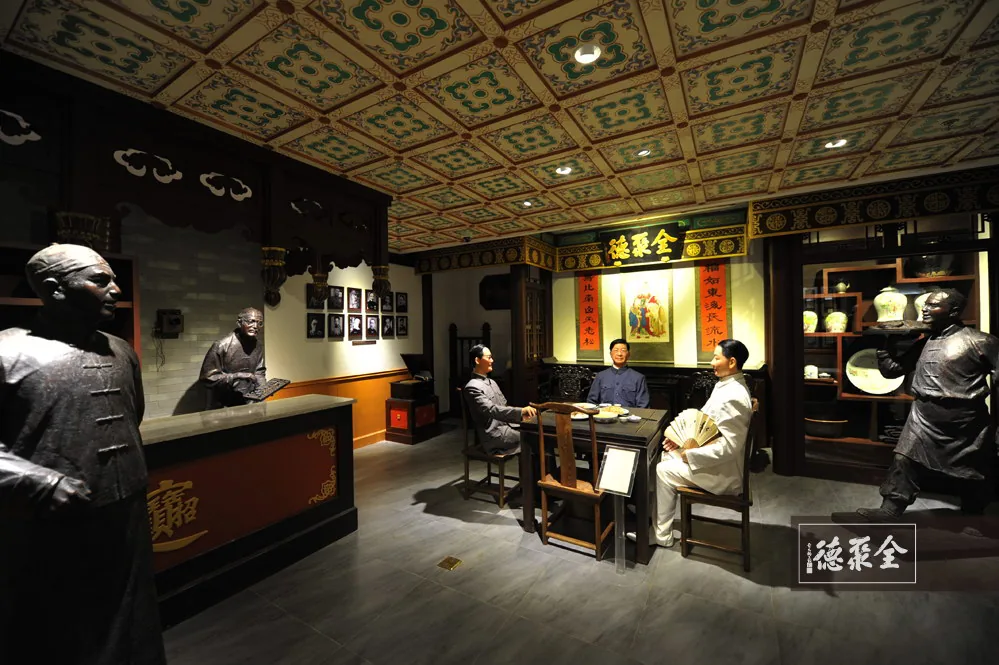
A recreation of the 1901 shop, with wax figures — Quanjude Group, quanjude.com.cn Sources: 全聚德集团官网 — 历史故事 · 全聚德集团官网 — 非遗传承
- 1930
A house run by managers
After the founder’s death his son Yang Qingmao took over. In 1930 the family handed Quanjude to Li Ziming, its first manager from outside the family — an arrangement other big restaurants later copied.
Sources: 全聚德集团官网 — 历史故事
- Late Qing → 1950s
From a Beijing name to a wider stage
Quanjude’s duck tickets became a smart way to give a duck. Later its roast duck reached diplomatic tables, and the house slowly became part of how China and its guests shared a meal.
Read moreThe duck ticketZhou Enlai and QuanjudeWriters and artistsChaplinTianxia Diyi Lou
Sources: 全聚德集团官网 — 历史故事
- 1979
The Hepingmen flagship
On 25 April 1979 the Hepingmen restaurant opened, after Premier Zhou proposed a new building. With 15,000 square metres and room for over 2,000 diners, it was then Asia’s largest roast-duck restaurant.
Read moreWhy it was built
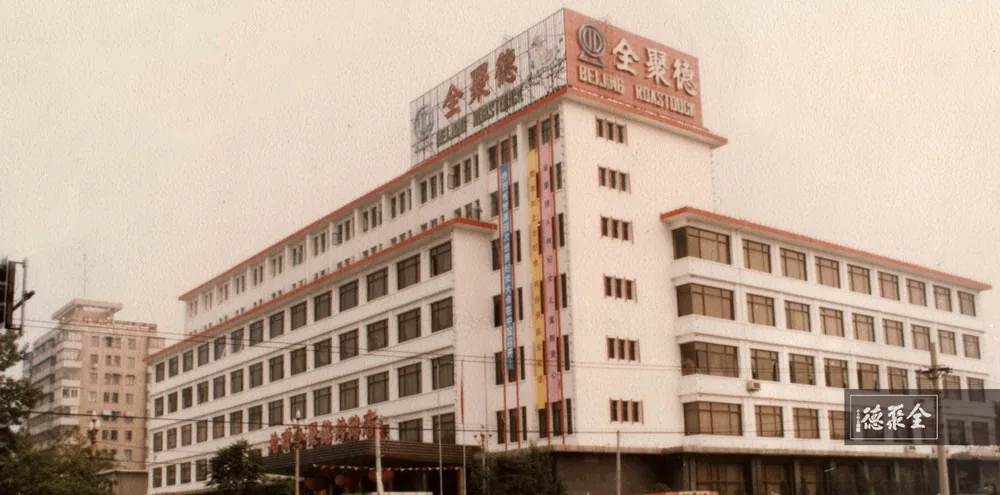
Hepingmen in the 1980s — Quanjude Group, quanjude.com.cn Sources: 全聚德集团官网 — 历史故事 · 新京报 (2019)
- 1993–2008
Growing into a group
The Quanjude Group company was founded in 1993, joined Beijing’s state-owned tourism group in 2004 and listed in Shenzhen in 2007. In 2008 its hung-oven roast-duck craft became national intangible heritage.
Read moreThe heritage craft
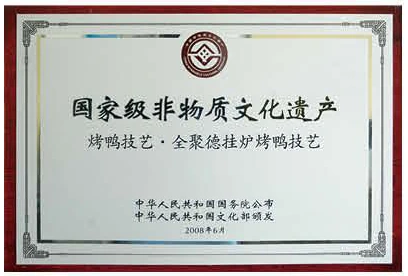
The 2008 heritage plaque — Photo: Quanjude Group / Quanjude Ottawa Sources: 澎湃新闻 (2024-05-29) · 国家非物质文化遗产网 ihchina.cn
- 2014
The peony at the APEC banquet
At the 2014 APEC leaders’ banquet in Beijing, eight Quanjude carvers plated the duck in four minutes as a peony, the “Prosperous Peony” — the same presentation as the Peony duck at Quanjude Ottawa.
Read moreThe Prosperous Peony
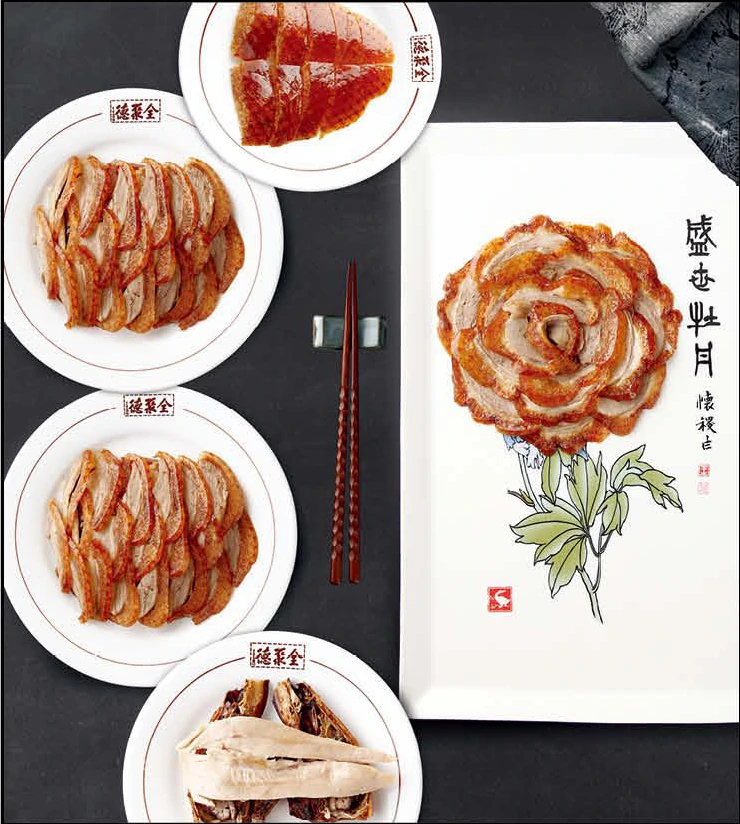
The Peony duck — Photo: Quanjude Group / Quanjude Ottawa Sources: 人民网 (2014-11-14)
- 2004 → 2025
Out of Beijing, across the world
Quanjude’s first overseas restaurant opened in Tokyo’s Shinjuku in October 2004, followed by Toronto in 2017, Bordeaux in 2019 and New York’s Fifth Avenue in October 2025. Across China the group’s four brands now run more than 90 restaurants in 20 provinces and regions.
Sources: 全聚德集团官网
- 2017 · 2022
Canada: Toronto, then Ottawa
In September 2017 Toronto became the first Quanjude in North America. In June 2022 the Ottawa restaurant opened upstairs at 90 George Street.
Sources: 全聚德集团官网
- Today
Beijing’s taste, in Ottawa
In a hall of red lattice screens in ByWard Market, the duck is still carved beside your table. The history above belongs to Quanjude in Beijing; this is its Ottawa chapter, on a market street that has fed people since 1827.
Read moreA short history of ByWard Market
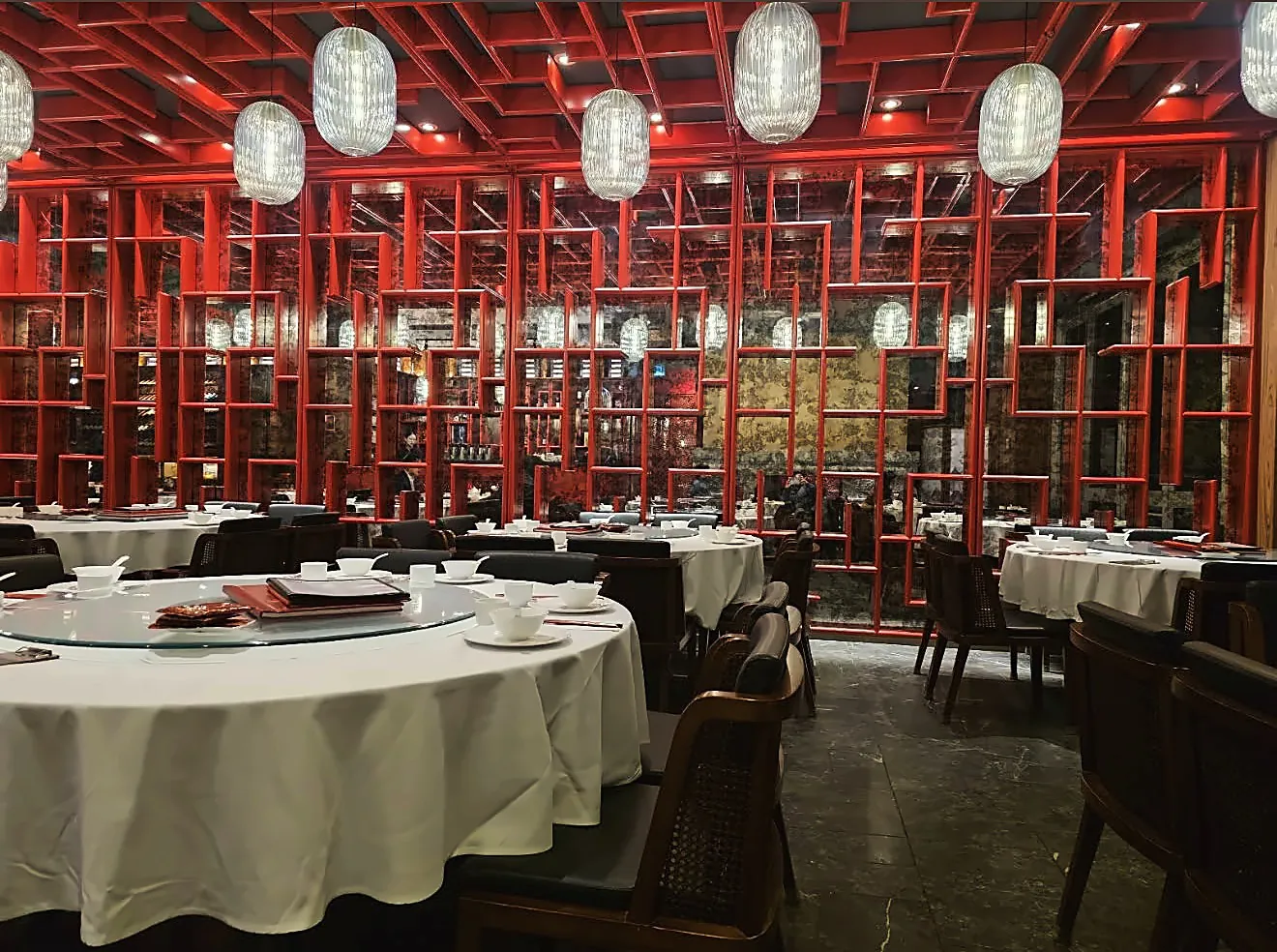
Quanjude Ottawa, 90 George Street — Photo: Quanjude Group / Quanjude Ottawa Sources: Narcity Ottawa (2022-06-23) · Urban Guide Quebec (2023-03-18) · Heritage Ottawa — ByWard Market HCD

The people behind the craft
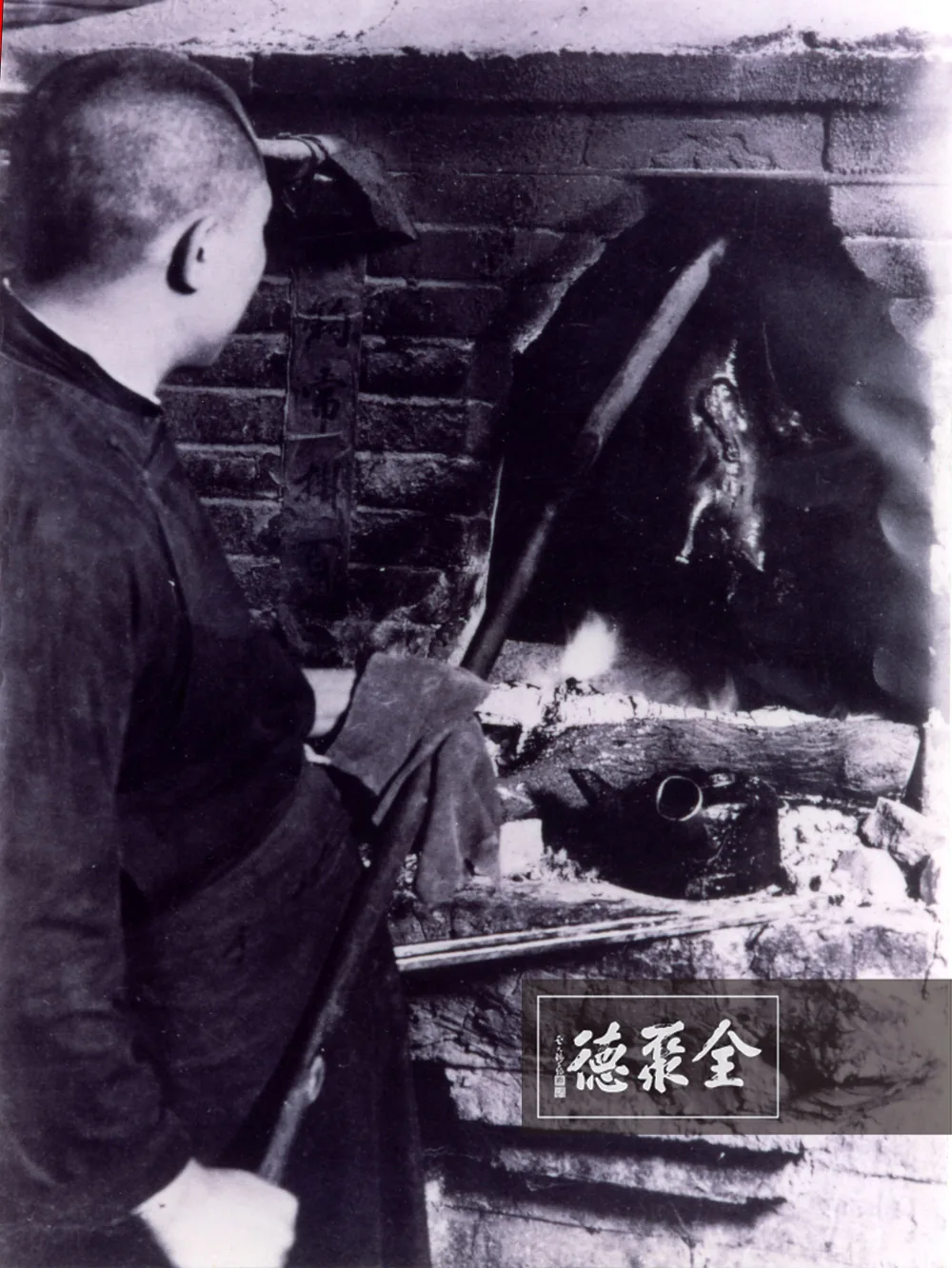
1933 — not Master Sun himself — Hedda Morrison (1933) via Quanjude Group, quanjude.com.cn Master Sun
Yang Quanren went looking for the best duck master. He won over Sun, who had made hung-oven duck for the palace, and Sun rebuilt the oven so a dozen ducks could roast at once. Accounts of Sun’s background differ in detail.
The craft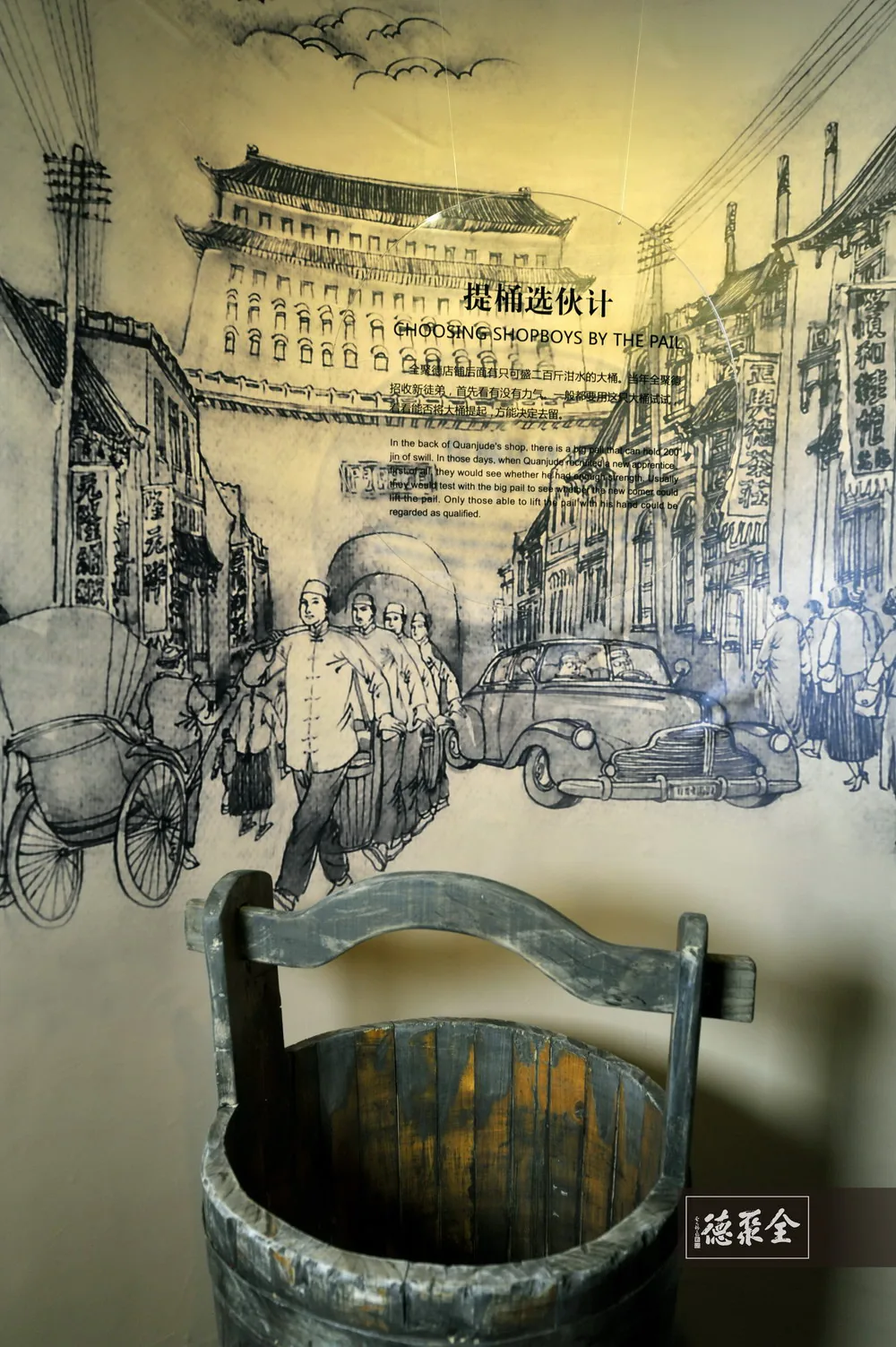
The selection bucket, Beijing — Quanjude Group, quanjude.com.cn The bucket test
In the 1930s and 40s a candidate had to lift a wooden bucket that held about 300 jin (some 150 kg) of swill; strength and quick wits got you hired. An apprentice then spent three to five years on odd jobs before touching the duck pole.
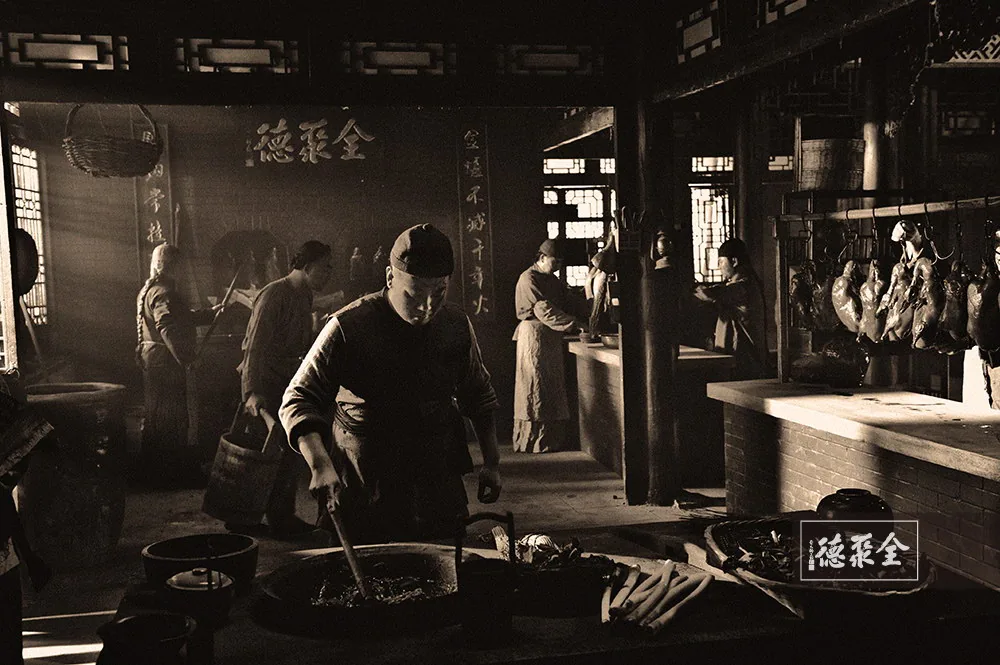
A re-creation from a Quanjude film, not an archive photograph — Quanjude Group, quanjude.com.cn Passed from hand to hand
For a long time the craft went down one line — Master Sun, then Pu Changchun, Zhang Wenzao and Tian Wenkuan. From 1970 the masters began to teach widely, and it has now reached its seventh generation.
Seven generations