
A restaurant that found its way onto the diplomatic calendar. In the decades after 1949, Quanjude’s duck was on the itinerary of foreign visitors to Beijing.
Twenty-seven dinners
Premier Zhou entertained foreign guests at Quanjude 27 times in his life. One evening is recorded in detail: 27 March 1957, a dinner for a Czechoslovak government delegation; there a guest asked what the name meant, and Zhou answered: 全, complete without flaw; 聚, gathered without scattering; 德, virtue above all — the reading the house still uses (the story is in our article on the signboard).
Duck diplomacy
In July 1971 Zhou served roast duck to Henry Kissinger, the US President’s envoy on his secret visit to China; in February 1972 he did so again for President Nixon. In April 1993 Nixon, long out of office, came back to Beijing and went to Quanjude to taste the duck once more. American newspapers wrote that climbing the Great Wall, eating roast duck and drinking Maotai was the finest travel pleasure — and duck, Maotai and ping-pong diplomacy are often counted together as Zhou’s three diplomatic styles.
Why Hepingmen was built
By the early 1970s more countries had established ties with China, and visitors from abroad expected to taste Quanjude duck. The Qianmen shop could not hold them. Zhou took a close interest in the house’s development and proposed a new, larger building.
The site chosen was Hepingmen, for its transport links and for its closeness to Zhongnanhai and the Great Hall of the People: on a map, the Xinhuamen gate, the Great Hall and the Hepingmen restaurant make an equilateral triangle. The building was finished at the end of 1978 after almost two years of round-the-clock work, and opened on 25 April 1979 with 15,000 square metres, more than forty banquet halls and room for over 2,000 diners — at the time Asia’s largest roast-duck restaurant, and still in use today.
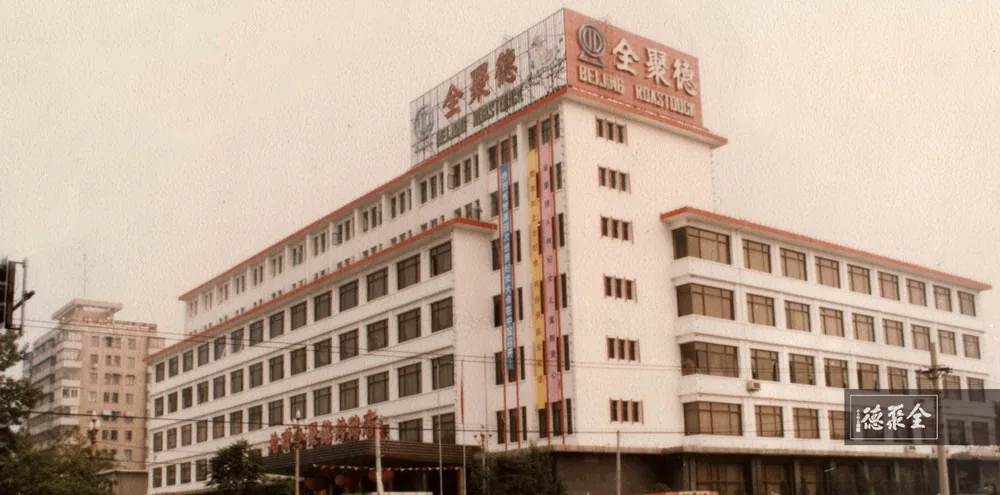
The “whole-duck banquet” was repeatedly chosen for state banquets, and the Hepingmen building houses Quanjude’s exhibition hall.
Sources: 全聚德集团官网 — 历史故事 · 全聚德集团官网 — 我们与国家 · 新京报 (2019)