PEKING DUCKOTTAWA

A Beijing icon

Why Peking duck and Quanjude matter to Beijing — the fire, the craft and the knife, and a heritage that is still being practised.

01

The craft

Fire, time and the knife.

What turns a duck into Peking duck happens long before it reaches the table.

  1. Prepare & hang
    01

    Prepare & hang

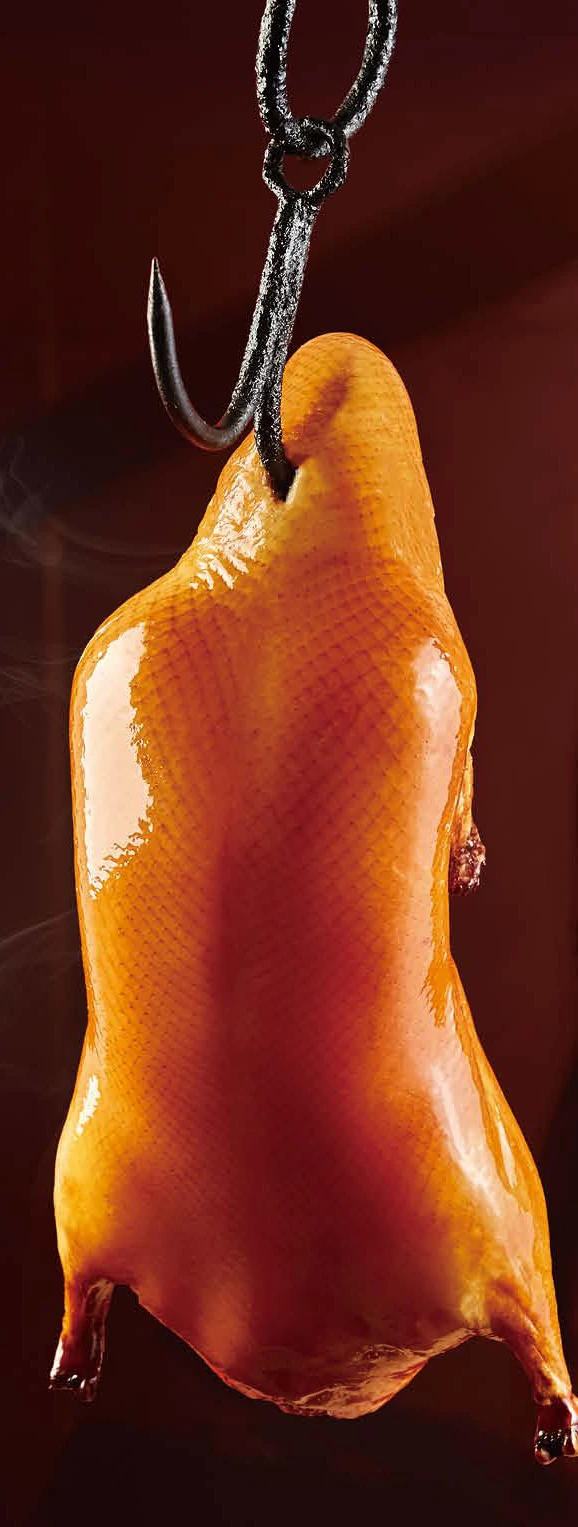
    The duck is prepared and dried so the skin can turn crisp, then hung on a hook — the “hung” in hung-oven roasting (挂炉).

  2. Fruitwood & open flame
    02

    Fruitwood & open flame

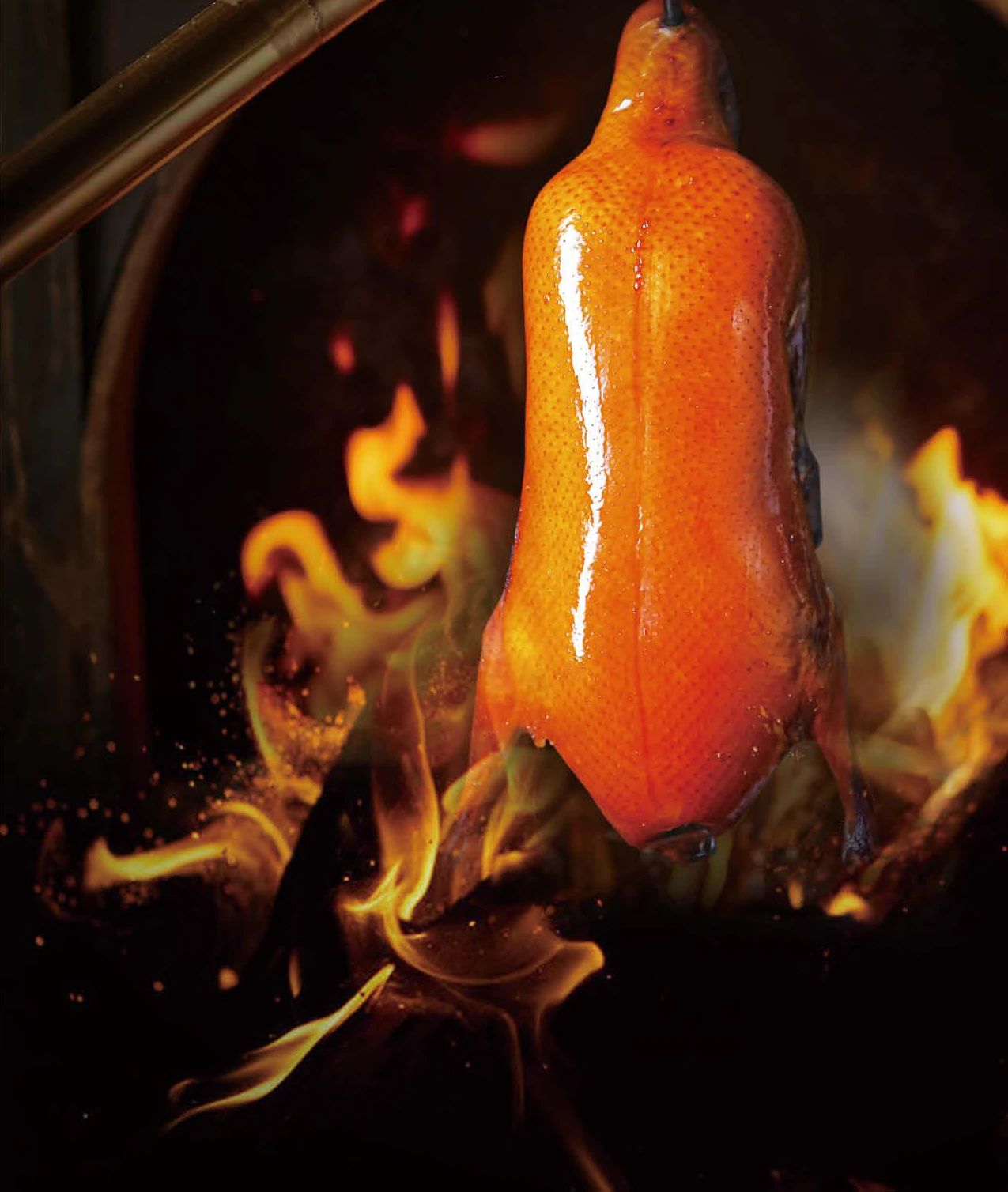
    In our hung oven the duck roasts over an open fruitwood flame. We call it “roasted outside, cooked inside” (外烤内煮): about 50 minutes, until the skin is plump, glossy and deep jujube-red.

  3. Carved at the table
    03

    Carved at the table

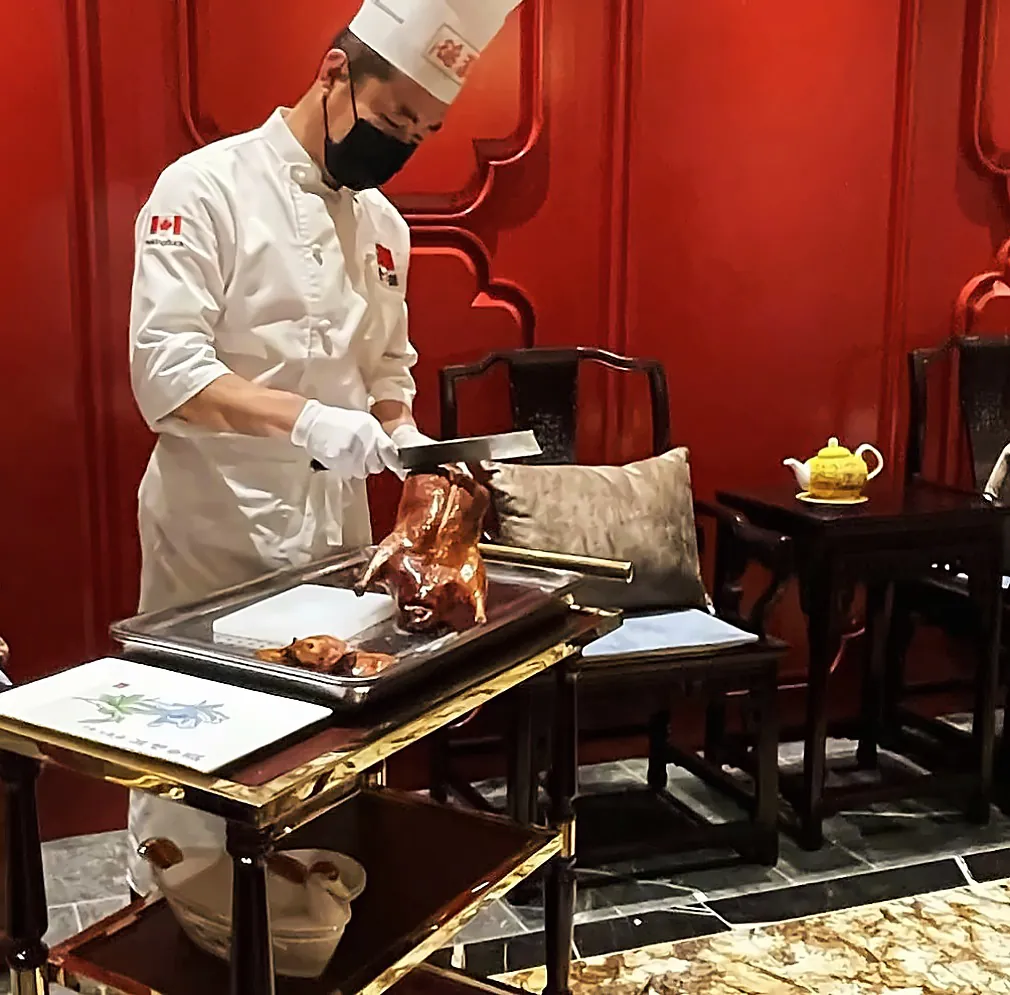
    A duck chef carves beside you: the crisp breast skin first, then thin slices that keep skin and meat together in every bite.

The sauce

Quanjude’s sweet bean sauce draws on the tradition of Liubiju (六必居), one of Beijing’s old sauce houses.

The pancake

Steamed “lotus-leaf” pancakes (荷叶饼): thin, soft and even, so they carry the duck without hiding it.

The accompaniments

Scallion and cucumber cut into fine strips — cucumber is the classic substitute if you skip scallion.

Behind the fire

A Craft Passed Down Through Generations

Where the technique comes from

Roast duck is old: Chinese texts describe it as early as the sixth century, and tradition says the Ming court’s cooks refined spit-roast and closed-oven methods and carried them to Beijing with the capital. In 1864 Quanjude’s founder hired Master Sun, who had worked in the Qing imperial kitchens, and Sun brought the palace’s hung-oven method — fruitwood, open flame — to an ordinary street shop. Accounts differ on the details of Sun’s background and of the hung oven’s earliest history; the people and dates are in the Heritage Story.

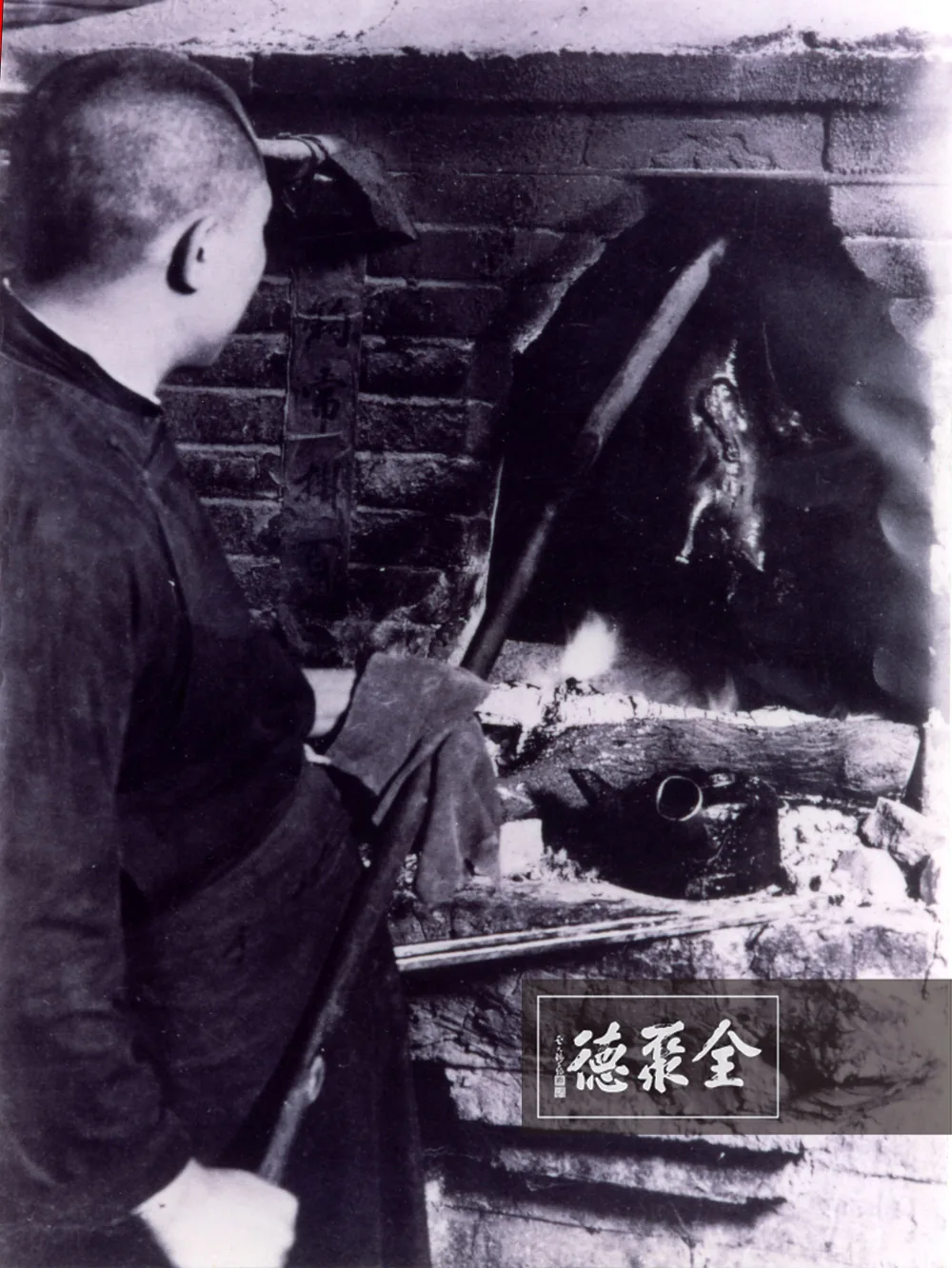
A cook at a Quanjude hung oven, photographed in 1933
A cook at a Quanjude oven, 1933 — photograph by Hedda Morrison, as shared by Quanjude.

The hung oven

A hung oven burns fruitwood and has an opening but no door: the ducks hang from a beam and roast in the open flame, and the master keeps turning them so they colour and cook evenly. Direct flame draws the fat out from under the skin, so the skin turns crisp and the meat stays tender, with a fruitwood fragrance. Because the oven is open, new ducks can be added as others roast, saving time and fuel and shortening the wait.

The oven has been refined over 160 years: a fire baffle of wood and brick that holds the logs, lets air through and lets the fire be adjusted, and rounded “cheeks” instead of right angles, so heat spreads evenly and smoke can leave. How it differs from a closed oven is told in our Journal. Hung oven vs. closed oven →

Four stages, more than thirty steps

The traditional craft is divided into slaughter and scalding, preparing the carcass, roasting and carving. Four of its steps show how much hides in a duck:

开生Opening the duck

A 3–4 cm crescent cut under the right wing, through which the innards are drawn; the wing falls back over it, so air pumped under the skin does not leak and the shape stays intact.

打色Colouring

Maltose-syrup water is poured over the duck. Too strong and the duck turns dark and bitter, too weak and it never reaches jujube-red; the mix changes with the season and even the weather, judged by the old masters’ experience.

燎裆Scorching the crotch

Unique to hung ovens: the thick legs sit below the flame at the oven mouth, so the master moves the duck back and forth over the flame tips — roast, scorch, turn — a dance on the fire.

出炉Out of the oven

The third-generation master’s test: “eye, hand, nose” — judge by the roasting time, the fire and the colour, and feel the weight on the pole, without taking the duck out to check.

02

Why it matters

Beijing’s calling card.

Peking duck is more than a famous dish: it is how Beijing welcomes guests — and Quanjude has been at that table since 1864.

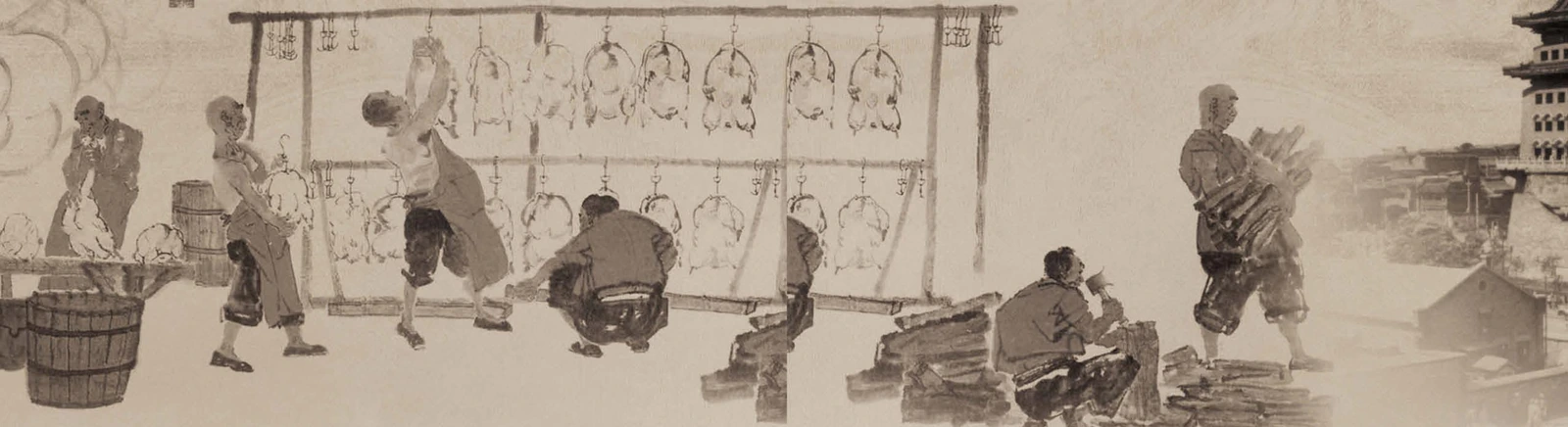
Ink painting of cooks hanging ducks and stacking firewood outside an old Beijing roast-duck shop

Seven generations of masters

The hung-oven craft has passed through seven generations of duck masters — first from master to apprentice, then, since 1970, through shared training — and is still practised and taught today. The people and their stories are in the Heritage Story.
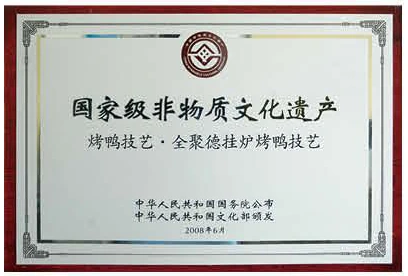
  • 2008The hung-oven roast duck craft is listed as national intangible cultural heritage.
  • 2014Eight Quanjude carvers plate the “Prosperous Peony” duck at the APEC leaders’ banquet in Beijing.
  • 200+Quanjude has received more than 200 heads of state and political figures.

Read the full illustrated story

National intangible cultural heritage plaque for Quanjude’s hung-oven roast duck craft, June 2008

A living heritage

Intangible heritage survives only when it is practised. “Quanjude hung-oven roast duck craft” was entered on China’s national list in 2008 (item Ⅷ-167): the heritage is the craft itself — the oven, the fire, the four stages and thirty-odd steps — not every restaurant, chef or dish that carries the name. Quanjude’s whole-duck banquet craft was listed the same year at district level (Xicheng, Beijing), a different tier; our Journal article sets the two apart. The name carries the ideals — 全而无缺 complete without flaw, 聚而不散 gathered without scattering, 仁德至上 virtue above all — and the Qianmen flagship’s facade in Beijing is a protected cultural-relic site.

不到长城非好汉,不吃全聚德烤鸭真遗憾。“One who has not reached the Great Wall is no hero; one who has not eaten Quanjude roast duck will have regrets.”

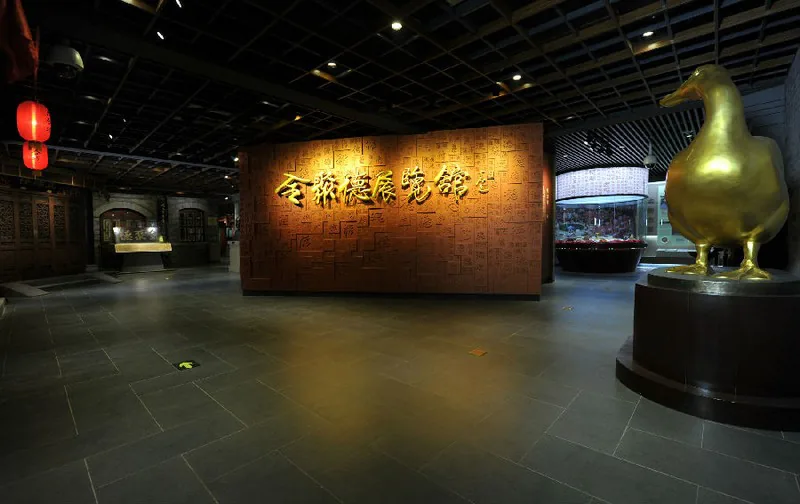
The exhibition hall

Quanjude Exhibition Hall, Beijing

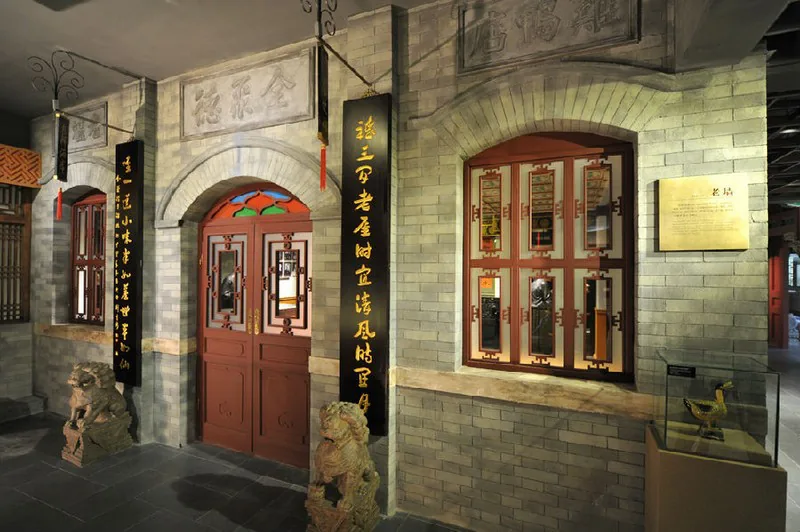
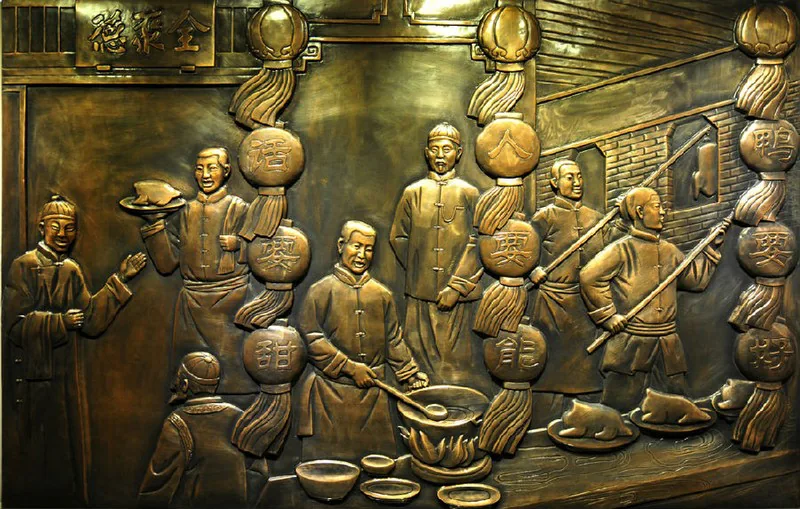
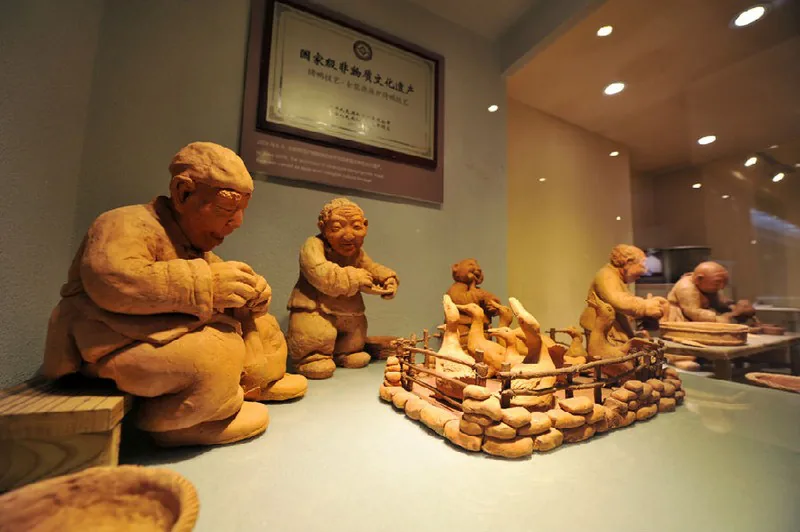
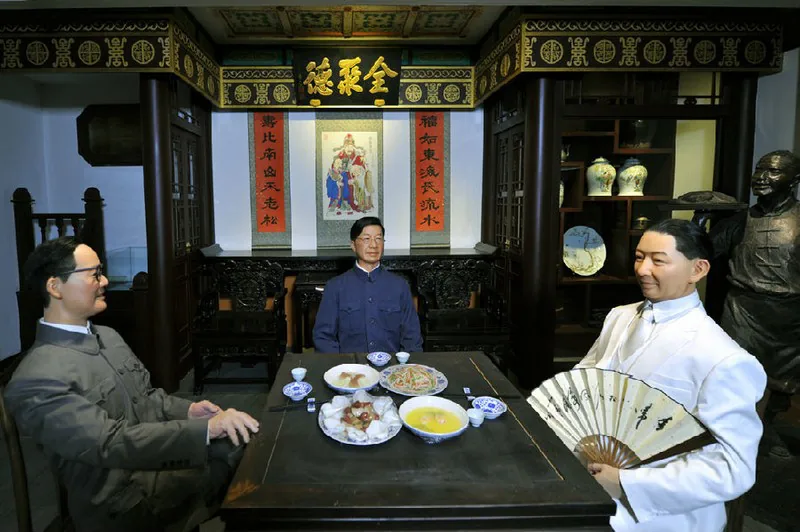
In Beijing, Quanjude keeps an exhibition hall of nearly 400 square metres on the third floor of the group’s headquarters building, beside the Heping Men roast-duck restaurant. It looks back on how roast duck has changed, condenses the old brand’s development, and explains what the Quanjude culture means — all around its motto: complete without flaw, gathered without scattering, virtue above all.

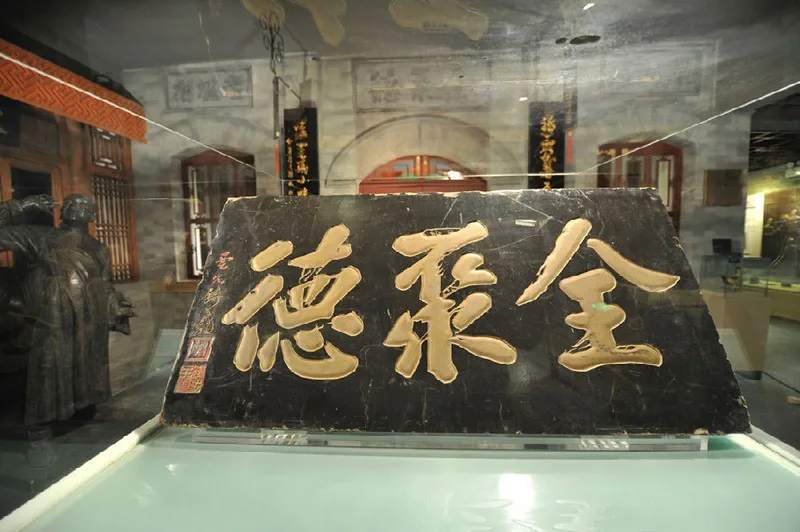
  • The Quanjude signboard
    The Quanjude signboard
  • A recreated old Beijing shopfront
    A recreated old Beijing shopfront
  • Bronze relief of the early duck shop
    Bronze relief of the early duck shop
  • Clay figures of duck rearing
    Clay figures of duck rearing
  • A recreated dining scene
    A recreated dining scene
  • The hall’s entrance, with its golden duck
    The hall’s entrance, with its golden duck

Exhibition photographs and description: Quanjude Group.