
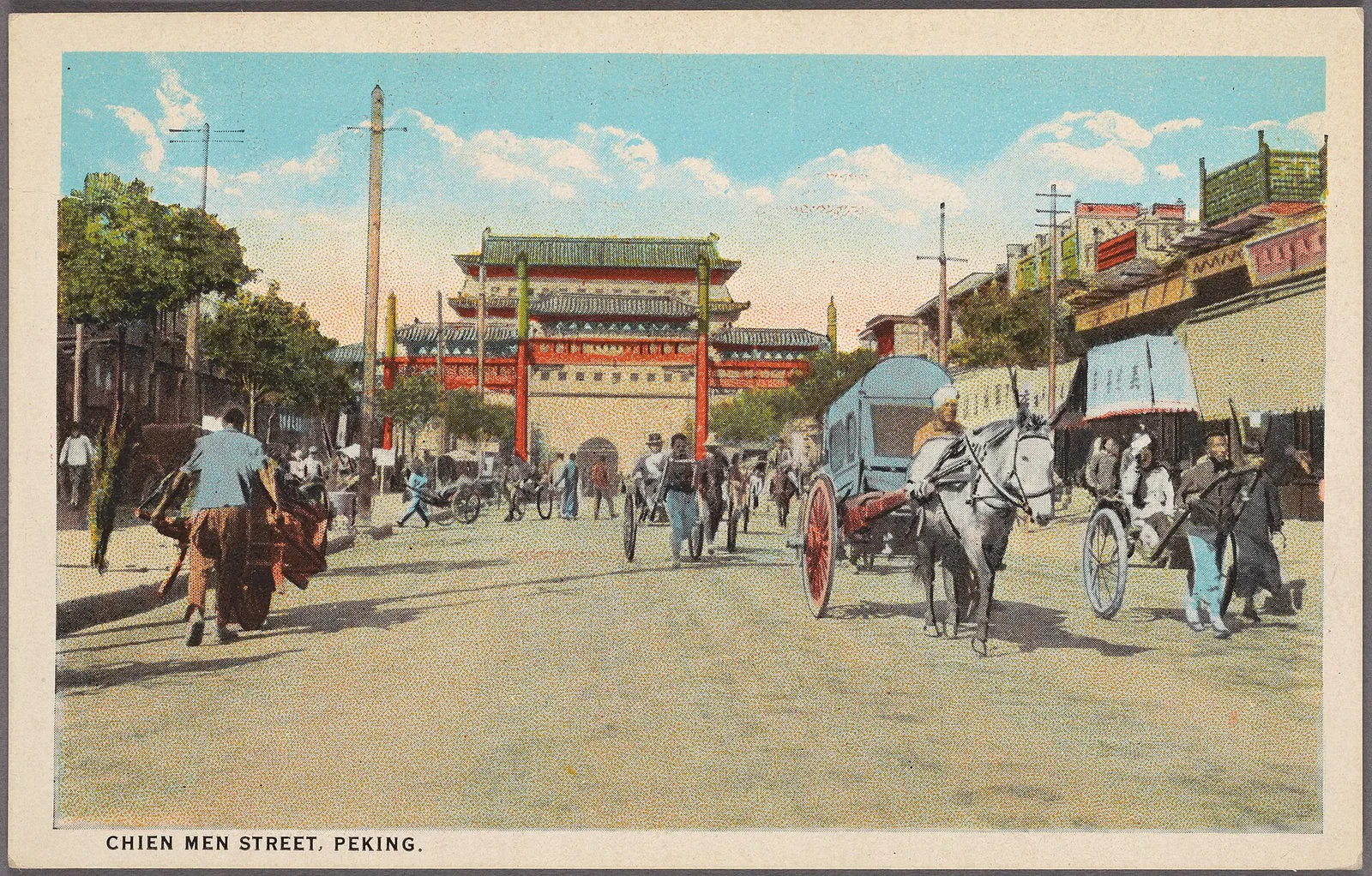
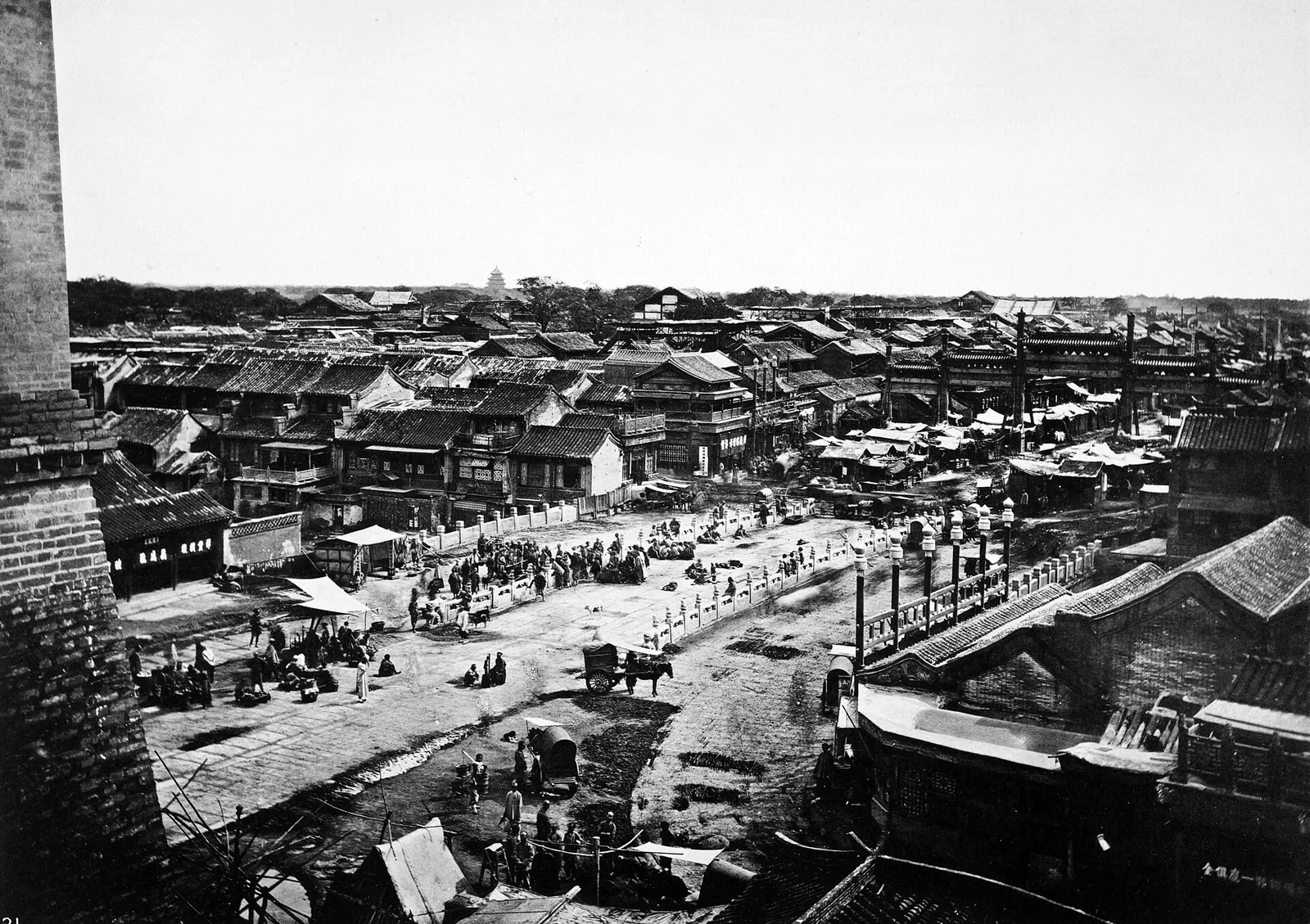
In 1864 — the third year of the Tongzhi reign of the Qing — a merchant from Hebei who made his living selling chickens and ducks in Beijing took over a failing shop. It stood on the meat-market street near Qianmen, the gate that gives the district its name. His name was Yang Quanren. He turned the shop into Quanjude, and Quanjude still counts its years from 1864.

A name turned back to front
The shop had been called Dejuquan (德聚全). Yang turned the three characters around to make Quanjude (全聚德): it kept the 全 of his own name and carried a promise to trade with virtue (德). A popular tale says the 德 on the old signboard was written one stroke short because fourteen people worked in the shop. It is a good story, and only a story.
The story as the house tells it adds a fuller scene. Yang is said to have asked a feng-shui master about the shop and been advised to turn the three characters around; the scholar Qian Zilong then wrote them on a black-and-gold signboard, and Quanjude opened on 9 July 1864, the sixth day of the sixth lunar month. The feng-shui exchange is a story handed down rather than a documented record. It is set out, with the people and dates around it, in the Heritage Story.

What the three characters carry
The name carries a reading that goes back to Premier Zhou Enlai. On 27 March 1957, at a dinner for a Czechoslovak government delegation, a guest asked what “Quanjude” meant. Zhou thought for a moment and said the name read well: 全, complete without flaw; 聚, gathered without scattering; 德, virtue above all. It is the version the house still prints on itself, and the one our home page uses for its three pillars.
A signboard is more than a sign in an old Beijing shop. It carries the house’s credit: customers judged a business by it, and the three characters on a black ground with gold lettering were what Quanjude’s cooks, floor staff and apprentices worked under. Exhibition-hall visitors in Beijing can still see the signboard on display.
For the story of the shop that grew from this signboard, from 1864 to Ottawa, see the Heritage Story; for the oven and the craft, A Beijing Icon.
Sources: 全聚德集团官网 — 历史故事 · 全聚德集团官网 · 中文维基百科 — 全聚德 · English Wikipedia — Quanjude