
The duck does not arrive ready to eat. A chef in white and a tall hat carves it beside your table and fans the slices out on a duck-shaped plate. This part is worth watching — there is no hurry to reach for a pancake.
Skin first, with sugar
Before you roll anything, take one slice of skin and dip it, on its own, in a little white sugar. The skin is the soul of the dish — thin, glossy, brittle — and with no sauce or scallion to compete you can taste exactly how crisp it is. The sugar melts into the rendered fat and makes it taste lighter, almost like a brittle. Eat it while it is hot.
Then the pancake
Lay a thin steamed “lotus-leaf” pancake (荷叶饼) flat — thin, even and soft, so it carries the duck without hiding it. Brush a little sweet bean sauce across the middle; ours follows the tradition of Liubiju (六必居), one of Beijing’s old sauce houses, sweet and savoury rather than only sweet. Add a few strips of scallion and cucumber, then two or three slices of duck with skin and meat together. Fold the bottom up, fold in the sides and eat it by hand.
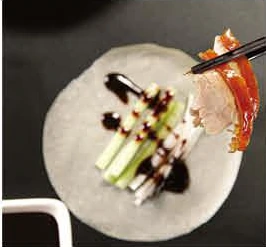
Scallion and cucumber both come to the table; cucumber is the classic stand-in if you do not like scallion, so leave out what you don’t enjoy — no combination is wrong. And the rolling is up to you: tradition has it that Peking duck is rolled by the diner, whoever the diner is.
The rack, your way
When the slices are gone, the rack becomes a second dish: duck soup simmered until milky, packed to take home, or prepared salt-and-pepper style or spicy. Nothing is wasted — that is part of how a whole duck becomes a whole meal.
What goes well with it
Duck is rich, so its best partners have some edge — salt, mustard, sourness. A cold dish of duck web in mustard sauce, the classic opener of the duck banquet, wakes the appetite before the star arrives. Fire-touched duck hearts, tender under a crisp crust with a whisper of liquor, sit well beside it, and a sour-and-spicy cuttlefish roe soup changes the pace. To close, little ducks of flaky pastry filled with date paste.